
The founders of Partners in Equity (PIE) on why ownership is the missing piece of the wealth-building puzzle.
Quick Facts
- Founding date: 2022
- Fund size: $20 million
- Typical investment: minority equity positions, generally under 20 percent of project cost, often $150,000 to $500,000 per acquisition

Why did you start PIE, and what problem were you trying to solve?
The commercial real estate market has been largely closed off to talented, lower-wealth entrepreneurs, not because they lack ability or vision, but because of how the system is structured. Down payment requirements are prohibitive, and traditional underwriting cares far more about collateral than about whether a business is actually sound. We started PIE because we saw a real wealth-building opportunity being missed. Decades of work in community finance taught us that ownership, real equity-building ownership, is one of the most durable paths to generational wealth, and almost no one was opening that door for established owner-operators.
“We wanted to flip the model. Instead of filtering people out, we built an underwriting approach designed to let high-potential entrepreneurs in.”
How is PIE fundamentally different from a traditional real estate fund?
Three things stand out. First, we provide the missing equity that brings an owner-operator’s required contribution down to as little as five percent, while we take a minority position of less than twenty percent in the property. That single change opens a door that would otherwise stay shut. Second, we underwrite the business, not the collateral. If the operation is strong and the community case is clear, we are interested. Third, every investment is evaluated on both its financial return and its community impact. Neither one is optional.
What else goes into a PIE investment?
Capital is only the start. We bring lender and CDFI partnerships, underwriting built around the realities of small business, and a relationship network that most traditional funds simply do not have. We also run a property acquisition program that prepares owners for the responsibilities of ownership, and we work alongside a nonprofit affiliate that handles community education, owner readiness, and the storytelling and advocacy that build our pipeline. The capital and the capacity-building reinforce each other. You cannot just write a check and expect lasting change in places that have long been short on access to capital.
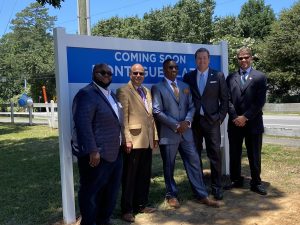
Wilson Lester, Managing Partner. Partners in Equity attends Montague Plaza ground breaking (Raleigh NC).
Can you walk us through a real investment that captures what PIE is trying to do?
Take a community mental health provider who wanted to acquire the commercial office park where the practice operated but could not access traditional financing because of the down payment barrier, not because the business was weak. PIE invested about $226,000 in equity, bringing the owner’s required contribution down to roughly five percent. Since then the property has appreciated from around $950,000 to about $2 million, creating more than $850,000 in equity for the owner, who now holds an 81 percent stake. The site anchors the practice and the jobs that come with it, and a tenant has become an owner. That is the whole model in a single deal: a structural change in who gets to own, real wealth for the operator, and lasting stability for the community.
What happens if funds like PIE don’t get the capital they need?
The opportunity stays locked up. Established owner-operators keep getting filtered out of a sector where ownership is one of the surest paths to lasting wealth. The wealth gap does not just persist, it compounds. Communities keep facing displacement and disinvestment. And investors keep missing a large, underserved market that delivers real, measurable returns. This is not charity. It is a structural correction that benefits everyone, but only if the capital shows up.