
The GROW Fund is putting residents, not finance professionals, in charge of investment decisions in one of London’s most underinvested boroughs. We sat down with the team behind the Barking & Dagenham Giving (the team behind the GROW Fund) to explore how they built a $2.2M resident-led fund, what it takes to shift economic power, and how they’re backing entrepreneurs traditional finance leaves behind.
Quick Facts
- Founding date: 2022
- Fund size: $2.2M
- Typical investment: Blended finance, wraparound support and participatory decision-making to back entrepreneurs and recycle capital in the region
Q: What is the GROW Fund, and why was it created?
The GROW Fund was launched by Barking & Dagenham Giving (BD Giving) in partnership with Barking & Dagenham Council to fundamentally change how money moves in our borough, one of the most underinvested places in the UK. We rethought how housing assets and development taxes, specifically Section 106 and Community Infrastructure Levy funding, could deliver lasting benefit for local people.
BD Giving became the majority stakeholder in a 900-home housing company, reinvesting income into resident-led projects and using development taxes to build a permanent endowment. The GROW Fund is a dedicated tranche of that endowment, creating the UK’s first 100% community-led impact investment fund.
Q: How does this model advance racial, gender, and income justice?
Justice starts with who decides. Each GROW funding cycle is shaped by residents and local entrepreneurs who bring lived experience into every stage, from setting eligibility criteria to assessing risk. In fact, 72% of participants report having a genuine say in where the money goes. Justice is also reflected in who receives capital:
- 80% of funded entrepreneurs are women.
- 70% are Black.
- 100% are rooted in underinvested neighbourhoods systematically excluded from mainstream finance.
By anchoring opportunity right here in the most deprived area in East London, we counter long-term brain drain and prove that locally led finance reshapes both economic outcomes and power structures.
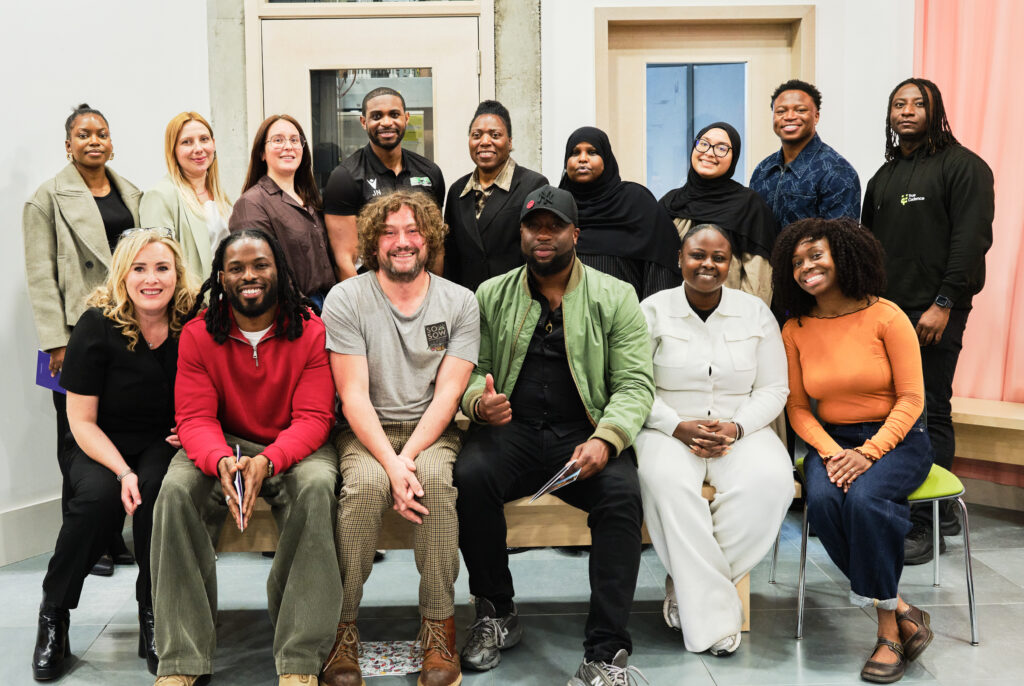
2026 GROW Cohort
Q: What makes the GROW Fund fundamentally different from traditional finance?
Three key pillars set us apart:
- Community-Designed Governance: Our investment policy was shaped over 18 months by a 12-person steering group of local residents with zero professional finance background. Their lived experience defined our eligibility, risk models, and terms.
- Co-Designed Term Sheets: We reject rigid, transactional agreements. Instead, investment documents are built with entrepreneurs through open, transparent processes where they can ask questions and edit terms.
- Place-Anchored Ecosystem: GROW acts as infrastructure, not just a standalone fund. We are actively building a social investment market where none existed, keeping talent local and shifting outside investors’ perceptions of Barking & Dagenham from risk to opportunity.
Q: Can you walk us through a real-world example of this in action?
Take Ultimate Counselling, a counselling and mental health service-provider for local refugee and migrant communities led by Sarah. In 2023 the GROW Fund first supported Sarah with enterprise grant so she could fully transition out of her part-time role as a social worker and fulltime into CEO of Ultimate Counselling. As she focused her attention on her business, Sarah wanted to build earned income and reduce grant dependency. Though initially sceptical of repayable finance, she joined GROW learning sessions and used a small grant to test new revenue streams. Sarah explored the possibilities of a loan from GROW and co-designed her investment terms: a £25,000 loan repaid over 5 years at 5% interest, built entirely around her business realities. Two years into successful repayments, Sarah now sits on our steering group, shaping the Fund’s future for the next cohort.
“The GROW loan is providing organisational stability. We are sincerely grateful for the honest guidance and encouragement provided along the way.”” – Sarah Founder of Ultimate Counselling & GROW Fund borrower
Q: How are investments typically structured for founders?
The GROW Fund provides unrestricted grants of £10,000–£25,000 paired with six months of development support—including a dedicated coach and a peer learning community. When entrepreneurs complete the programme they are eligible for a loan from the fund within the range of £25,000-200,000.
The enterprise grant cohort selection is made through community assemblies and public pitch events where local residents vote directly. The business development programme is co-designed by the cohort themselves. After completing the programme, founders may apply for a loan, with terms co-designed to reflect business realities rather than standard investment norms. Investment decisions are made by BD Giving’s Finance Committee based on readiness, need, and available capital. BD Giving also partners with other impact investors on co-investments. Where investment is not yet appropriate, founders are supported into alternative funding pathways.
Q: How do you measure success?
Our primary metric is where power resides. We track the extent to which local residents and entrepreneurs feel genuine agency over decisions, and whether that agency translates into funding for founders excluded from mainstream finance.
At the founder level, success means sustainable repayments on co-designed terms and continued ecosystem engagement—whether those entrepreneurs return as decision-makers, mentors, or advocates who refer others.
Q: What kind of investors are you looking to partner with?
We seek partners who are comfortable sharing power. Ideal investors take a long-term, patient approach to capital—valuing place-based impact over short-term returns. They understand that traditional risk metrics often exclude the very communities we exist to serve, and they view lived experience as genuine expertise.